

Why Pet Friendly Apartment Buildings Are Reshaping Urban Living
Pet friendly apartment buildings are no longer a niche offering—they're becoming the standard in urban rental markets. With nearly 59% of renters now having pets, the demand for accommodating living spaces has surged dramatically, pushing landlords and property managers to rethink their policies and amenities.
Quick Guide to Pet Friendly Apartment Buildings:
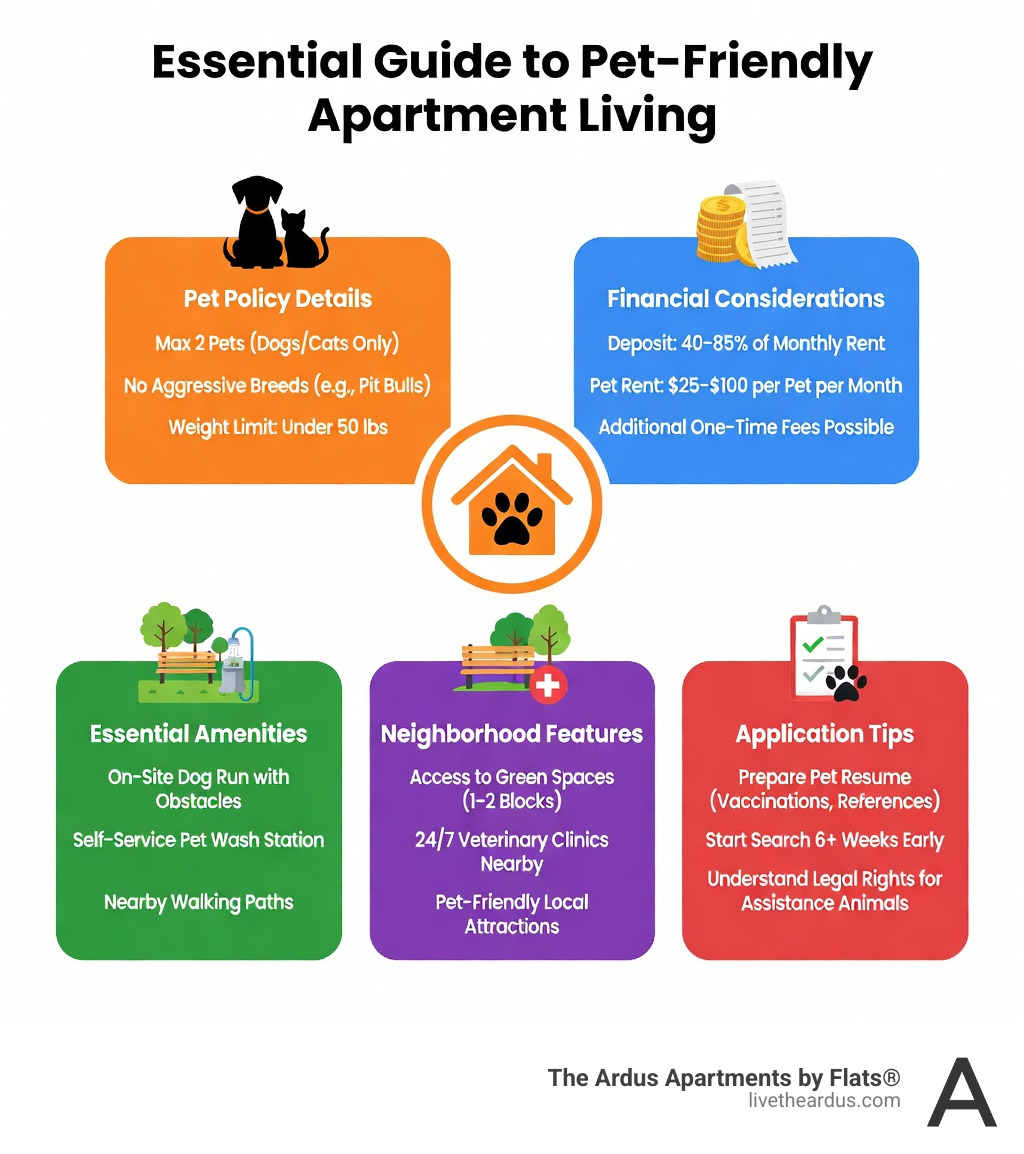
- Pet Policies - Most buildings allow up to two pets per apartment with specific breed and weight restrictions
- Typical Fees - Expect one-time deposits ranging from 40% to 85% of monthly rent, plus monthly pet rent of $25-$100 per pet
- Key Amenities - Look for on-site dog parks, pet washing stations, walking paths, and nearby green spaces
- Search Strategy - Use rental platforms with pet-friendly filters, prepare a pet resume with vaccination records and references, and start your search at least six weeks early
- Legal Rights - Assistance animals have protections under disability rights law, while companion animals are subject to standard pet policies
Finding the right home when you have a four-legged companion involves more than just locating a building that accepts pets. You'll need to steer breed restrictions, understand the true cost of pet fees and deposits, evaluate neighborhood amenities like nearby parks and veterinary clinics, and present yourself as a responsible pet owner.
The rental market has responded to this growing demand with purpose-built communities featuring dedicated dog runs, grooming stations, and proximity to pet-friendly attractions. These buildings recognize that pet ownership isn't just about allowing animals—it's about creating environments where both pets and their owners can thrive.
Whether you're searching in vibrant neighborhoods like River North Chicago or exploring other urban centers, understanding what makes a building truly pet-friendly will help you find a space that works for your entire household.
Understanding Policies in Pet Friendly Apartment Buildings
When we start looking for a new home with our furry roommates, the first thing we usually encounter is the "Pet Policy." This document is the rulebook for how animals and humans coexist in a building. In modern pet friendly apartment buildings, these policies have become much more detailed to ensure the comfort of all residents.

One of the most common problems we face is the list of prohibited breeds. Breed restrictions in urban areas are often put in place due to insurance requirements or perceived safety concerns. While it can be frustrating if your pup is on that list, these rules are typically non-negotiable for many large management companies. Common restricted breeds often include Akitas, Pit Bulls, and Rottweilers.
Weight limits are another factor to keep in mind. Some buildings might only allow "lap dogs" under 25 or 30 pounds, while others are more inclusive of larger breeds. However, almost all urban complexes adhere to a strict two-pet limit per apartment. This helps manage the density of animals in a shared living environment and ensures the building remains clean and quiet for everyone.
Before you sign on the dotted line, we recommend reviewing this Pet-Friendly Apartments Guide to better understand how lease agreements handle these details. You’ll also need to provide up-to-date vaccination records and proof of licensing. Landlords want to know that your pet is healthy and that you are a responsible owner who follows local ordinances.
Navigating Pet Fees and Deposits
Living with a pet usually comes with a bit of a financial "tail." Most pet friendly apartment buildings require additional payments beyond your standard security deposit. These costs are designed to cover the extra wear and tear that pets—even the well-behaved ones—can cause over time.
There are generally three types of costs you should prepare for:
- Pet Deposit: A one-time payment made at the start of the lease. This is often refundable if no damage occurs, but check your specific lease.
- Pet Fee: A non-refundable one-time payment for the "privilege" of having a pet in the building.
- Pet Rent: A monthly charge added to your rent bill.
It is always a good idea to check local regulations regarding these fees, as some areas have caps on how much a landlord can charge.
| Fee Type | Typical Amount | Frequency | Refundable? |
|---|---|---|---|
| Pet Deposit | 40% - 85% of monthly rent | One-time | Usually |
| Pet Fee | Flat amount (e.g., $300-$500) | One-time | No |
| Pet Rent | $25 - $100 per pet | Monthly | No |
Essential Amenities for Urban Pet Owners
The best pet friendly apartment buildings go beyond just "allowing" pets; they actively welcome them with specialized amenities. For those of us living in high-rise environments or busy city centers, these features can be absolute lifesavers.
The gold standard for pet amenities is the on-site dog park or dog run. These Apartments with Dog Parks provide a safe, convenient space for your dog to burn off energy without you having to trek across town in the rain. Some even include obstacle equipment like tunnels and problems for extra mental stimulation.
Another luxury we’ve come to love is the pet wash station. If you’ve ever tried to wash a muddy dog in a standard apartment bathtub, you know why a waist-high professional grooming tub is a game-changer. These stations often come equipped with industrial-strength dryers and specialized shampoos.
For more details on finding these perks in the Windy City, take a look at our Apartments Dog Runs Chicago Guide. Having these facilities within your own building means more time for cuddles and less time worrying about logistics.
Neighborhood Perks for Pet Friendly Apartment Buildings
While the building itself is important, the surrounding neighborhood plays a huge role in your pet's quality of life. In a city like Chicago, certain areas are much more "paw-friendly" than others. We always look for neighborhoods with wide sidewalks, plenty of trees, and, most importantly, proximity to green space.
River North, for example, is a fantastic spot for pet owners. There are several Dog Parks in River North that offer a chance for socialization. Beyond the parks, you'll want to scout for:
- Local Veterinarians: Knowing there is a 24-hour emergency clinic nearby provides immense peace of mind.
- Pet-Friendly Cafes: Many spots in Chicago allow you to bring your pup to the outdoor patio.
- Pet Boutiques: For those last-minute bag of treats or a new leash.
You can explore a wider list of Chicago Dog Parks to see which neighborhoods offer the best outdoor access for your specific needs.
Strategies for Securing Your Ideal Rental
Searching for pet friendly apartment buildings requires a bit more strategy than a standard apartment hunt. Because these units are in high demand, you need to be proactive and organized.
First, use the right tools. Platforms like Petfinder and major rental sites allow you to filter specifically for "cats allowed" or "dogs allowed." This saves you from falling in love with a place only to find out it's a "no-pets" zone.
Timing is also critical. We suggest starting your search at least six weeks before your current lease ends. This gives you enough time to visit multiple Pet-Friendly Places For Rent and verify their specific policies. Don't just take the listing's word for it—call the leasing office and ask specifically about your pet's breed and weight.
Creating a Pet Resume for Pet Friendly Apartment Buildings
If you want to stand out to a landlord, we highly recommend creating a pet resume. It might sound a little silly, but it shows that you are an incredibly responsible owner. A good pet resume can sometimes even help you negotiate if a building has a slight hesitation about your pet's size or breed.
According to our Pet-Friendly Apartment Chicago Guide, a strong pet resume should include:
- A Cute Photo: It’s harder to say "no" to a face that adorable!
- Training Certifications: Mention if your dog has passed "CGC" (Canine Good Citizen) or basic obedience classes.
- Vaccination Records: Proof that your pet is up to date on all shots.
- Behavior References: A quick note from a previous landlord or a neighbor confirming that your pet doesn't bark excessively or cause damage.
- Liability Insurance: Showing that you have pet coverage as part of your renter's insurance can go a long way in reassuring a property manager.
Creating a Harmonious Living Environment
Once you’ve moved into one of the many pet friendly apartment buildings available, the next step is making the space work for everyone. Apartment living with pets requires a bit of "pet-proofing" to keep your security deposit safe and your pet happy.
Start by looking at your space from your pet's perspective. Are there dangling cords they might chew? Fragile items on low coffee tables? Securing these items is the first step. For those living in smaller spaces, our Pet-Friendly Studio Apartments Complete Guide offers great tips on maximizing square footage while keeping your pet entertained.
Mental stimulation is just as important as physical exercise. Since apartment pets spend a lot of time indoors, provide plenty of puzzle toys and scratching posts. If you have a balcony, ensure it is completely safe; "cat-proofing" a balcony with mesh or ensuring dog-proof railings is vital for high-rise living.
Finally, be a good neighbor. Manage noise by using area rugs to muffle the sound of paws on the floor, and address separation anxiety early to prevent barking while you're away.
Frequently Asked Questions about Pet-Friendly Housing
What are common breed and weight restrictions in rentals?
Most pet friendly apartment buildings have a list of "restricted breeds" which typically include dogs like Mastiffs, Chows, and Dobermans. Weight caps are also common, often ranging from 25 to 50 pounds, though some luxury buildings in Chicago have "no weight limit" policies to attract owners of larger, well-behaved dogs. Always ask for the specific list from the property manager.
How do pet fees and deposits typically work?
You will usually pay a one-time pet deposit (which may be refundable) and a non-refundable pet fee. Additionally, expect to pay "pet rent" every month. These funds help the building maintain pet-specific amenities and cover the costs of deep-cleaning common areas and units after a pet moves out.
What legal rights and responsibilities do pet owners have?
Under the Fair Housing Act, service animals and emotional support animals (ESAs) are not considered "pets." They are viewed as assistive aids for people with disabilities. This means they are often exempt from breed restrictions and pet fees, provided you have the proper legal documentation. However, as an owner, you are still legally responsible for any damage your animal causes and for following local leash and waste laws.
Conclusion
Finding a home in one of the premier pet friendly apartment buildings shouldn't feel like a chore. By understanding the policies, preparing your pet’s "credentials," and choosing a neighborhood that supports an active lifestyle, you can find a place where both you and your furry friend feel right at home.
At The Ardus Apartments in River North, Chicago, we’ve taken the historic charm of a former warehouse and transformed it into a modern sanctuary for urban dwellers and their pets. With our rooftop lounge, on-site coffee shop, and proximity to some of the best parks in the city, we provide a lifestyle that celebrates the bond between pets and their owners.
If you're ready to make your next move, check out our Pet-Friendly Apartments Chicago Complete Guide for even more tips on navigating the local rental market. We can’t wait to welcome you and your two pets to the community!