

Why Proximity to Transit Transforms Your Urban Experience
Apartments near public transport offer a lifestyle upgrade that goes far beyond just an easy commute. When you choose a home connected to the city's transit network, you're choosing independence, convenience, and a more vibrant way to live.
Top Benefits of Living Near Public Transit:
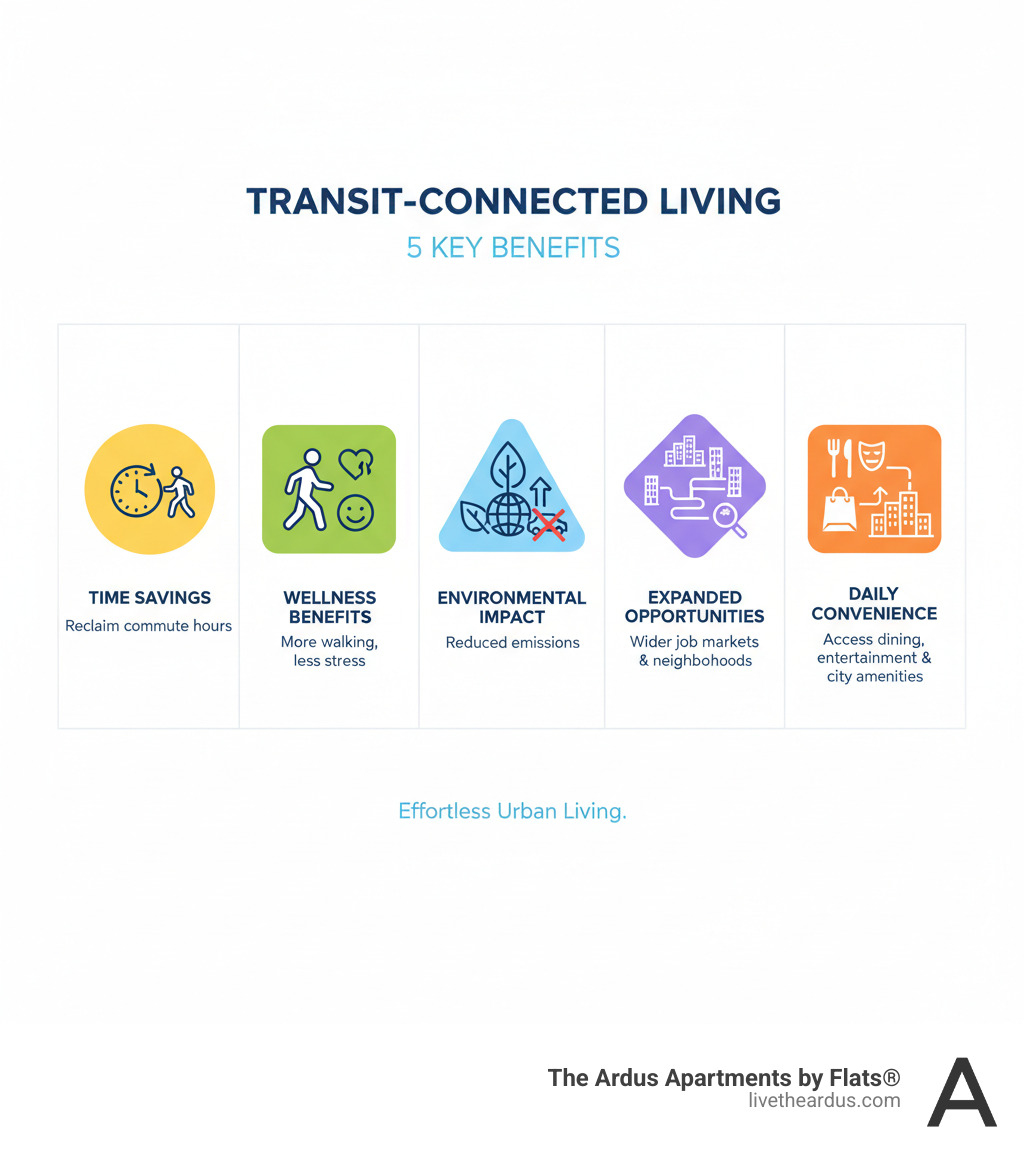
- Save Time Daily - Skip traffic jams and unpredictable commutes; use travel time for reading, working, or relaxing
- Boost Your Health - Walk more, stress less, and stay active without even trying
- Expand Your World - Access more neighborhoods, job opportunities, and social spots without car dependency
- Reduce Your Impact - Lower carbon emissions and contribute to cleaner air in your city
- Future-Proof Your Life - Stay ahead as cities grow denser and more transit-focused
After years of living on the street and crashing on friends' couches, Quantavia Smith was given the keys to a studio apartment in Los Angeles that came with an important perk — easy access to public transit. As she shared with reporters, that connection to the metro system gave her independence and opened doors to job opportunities she couldn't reach before.
The research is clear: nine times more housing was built far from public transit than near it over the past two decades. But that's changing. Cities from Los Angeles to Boston are now prioritizing transit-connected housing, and renters are finding why this matters so much.
Living near the 'L' in Chicago, the Metro in DC, or any reliable transit system means more than just catching a train. It means reclaiming hours lost to traffic. It means spontaneous plans without parking hassles. It means a healthier, less stressful, more connected life.
The Everyday Advantages of a Transit-Connected Lifestyle
Living in apartments near public transport changes your daily life in ways you might not expect until you experience it. It's not just about catching a train to work—it's about how you spend your time, how you feel, and how connected you become to everything Chicago has to offer.
Best Convenience and Shorter Commutes
Picture this: You step out of your apartment, walk a few minutes to the 'L' station, and you're on your way across Chicago. No circling the block for parking. No sitting in bumper-to-bumper traffic wondering if you'll make it on time. For residents in neighborhoods like River North, this isn't a luxury—it's just Tuesday morning.
Rush hour traffic in Chicago can steal hours from your week. But when you live near transit, those hours come back to you. Instead of gripping a steering wheel in frustration, you're reading a book, answering emails, or just watching the city wake up outside your window. That time becomes yours again.
And the convenience extends beyond your commute. Want to check out the best River North restaurants for dinner? Easy. Meeting friends at a show downtown? Done. When you're looking at Chicago downtown rental apartments, proximity to transit means the entire city opens up to you. No second-guessing whether something is "too far" or if you'll find parking.
This is the freedom that transit-connected living offers—effortless access to everything that makes city life exciting.
Boost Your Well-being and Reduce Stress
Here's something interesting: When you use public transit regularly, you walk more without even thinking about it. Those trips to and from the station add up. You're incorporating movement into your routine naturally, no gym membership guilt required. And for those days when you want a more focused workout, many modern buildings (including ours) feature apartments with fitness center amenities.
But the wellness benefits go deeper than steps counted. There's something genuinely calming about not driving in city traffic. No more white-knuckling it through lane changes. No more hunting for parking spots that don't exist. No more arriving at your destination already exhausted from the journey.
When someone else handles the driving, your commute transforms from a stressor into an opportunity. You can prepare for your day ahead, decompress from the day behind, or simply zone out for a few peaceful minutes. That shift—from tension to tranquility—makes a real difference in how you feel day after day.
Your commute becomes productive time, reflective time, or rest time. Whatever you need it to be. That's a wellness benefit you can feel every single day.
Expand Your Horizons with Improved Mobility
Living in apartments near public transport gives you something precious: spontaneity. You're no longer calculating gas costs or parking availability before saying yes to plans. Want to explore a new neighborhood this weekend? Just go. Curious about that gallery opening across town? You're there.
This mobility reshapes your career possibilities too. When your commutable area expands beyond where you can reasonably drive and park, suddenly more neighborhoods become viable for work. You're not limited to jobs with convenient parking or those within a certain radius of your home. The entire city's job market becomes accessible, which means more opportunities to find work that truly fits your goals.
Your social life expands in the same way. Meeting friends in different neighborhoods, attending events across the city, finding new dining spots—it all becomes easier when reliable transit connects you to everywhere that matters. Explore the River North neighborhood and beyond without the logistics headache that usually comes with city living.
This kind of mobility isn't just convenient. It's liberating. It means living in a city the way cities are meant to be experienced—fully, widely, and without barriers.
The Bigger Picture: Environmental and Community Impact
When we choose apartments near public transport, we're doing more than picking a convenient place to live. We're participating in something biggera movement toward cities that are cleaner, more connected, and better designed for everyone who calls them home. Our housing decisions ripple outward, shaping the urban environment we all share.
A Greener Footprint: The Environmental Edge
Every time we board the 'L' train instead of getting behind the wheel, we're making a choice that matters for our planet. Public transportation systems are remarkably efficient at moving peoplefar more so than individual cars. A single train can carry hundreds of commuters who might otherwise be driving separate vehicles through Chicago's streets.
The environmental math is compelling. By living near and regularly using public transit, we actively reduce our carbon footprint. Fewer cars on the road means reduced carbon emissions and less air pollution hanging over our city. We've all seen those hazy summer days when the air quality alerts go outevery person choosing transit over driving helps make those days less frequent.
This shift also tackles traffic congestion in a meaningful way. Less congestion doesn't just make commutes faster; it actually reduces the emissions from idling vehicles stuck in gridlock. The streets become more breathable, more walkable, and frankly, more pleasant for everyone.
For those of us committed to sustainable urban living, choosing apartments near public transport is one of the most impactful decisions we can make. Many modern buildings, including ours at The Ardus, complement this green lifestyle with features like apartments with bike storage, making it even easier to leave the car behind for good.
The Rise of Transit-Oriented Development
Cities across the country are embracing a smarter way to grow, and it's called Transit-Oriented Development, or TOD. For a concise overview of the concept and its benefits, see Transit-oriented development.
The concept is straightforward: build housing, shops, offices, and community spaces within easy walking distance of public transportation. When everything we need is clustered around transit hubs, the whole system works better.
This approach tackles multiple urban challenges at once. TOD offers real solutions to housing shortages by concentrating new development near existing infrastructure. Instead of sprawling outward and requiring new roads, utilities, and services, cities can grow upward and inward around the transit networks already in place. This makes housing more accessible to renters looking for connected, convenient living.
The climate benefits are equally significant. When people can walk to a train station and reach work, restaurants, and entertainment without a car, they naturally drive less. This translates directly into fewer greenhouse gas emissions. As research shows, building more apartments near public transit can help address both the housing crisis and climate change simultaneouslytwo of our era's most pressing challenges.
TOD also breathes new life into neighborhoods. These developments often include mixed-use spaces that bring shops, cafes, and services right to the ground floor, with apartments above. Areas that might have been underused suddenly become vibrant, walkable communities with real character. Washington D.C.'s transit authority has completed dozens of projects near transit sites, creating thousands of apartments and millions of square feet of commercial space. The result? Neighborhoods that feel alive, connected, and full of possibility.

Shaping Future Cities: Zoning and Development
Transit-oriented living isn't expanding by accident. Behind the scenes, cities and states are actively reforming zoning laws that have, for decades, made it difficult to build multi-family housing near transit. These outdated regulations have contributed to housing shortages and forced development away from the very infrastructure designed to support it.
The tide is turning. States like California, Colorado, and Utah are passing laws that allowand even encouragemore multi-family developments near public transit. Massachusetts took it a step further with a law requiring towns to create zoning districts specifically for multi-family housing, which has resulted in thousands of new units entering the development pipeline. While Chicago's zoning landscape has its own unique characteristics, the underlying goal remains the same: get more housing near the trains and buses that make city life work.
These reforms often involve strategic partnerships between cities and developers. Developers might receive incentiveslike reduced land costs or expedited approvalsin exchange for building more housing units or incorporating community-focused amenities. It's a collaborative approach that benefits everyone involved.
This is what future-proofing our lifestyle really means. Cities aren't getting smaller or less dense. As urban populations grow, the places that thrive will be those designed around efficient, sustainable transportation. Living near transit today means we're already positioned for tomorrow's urban landscape. We're not just adapting to current trends; we're aligned with the long-term planning that will define Chicago and cities everywhere.
When we choose apartments near public transport, we're choosing to be part of a city that's building smarter, growing greener, and creating communities that work better for everyone.
Your Guide to Finding Apartments near Public Transport
Now that we've explored the myriad benefits, let's talk about how to find your ideal apartments near public transport. It's about being strategic in your search, understanding what matters most for your lifestyle, and knowing what features to look for in a transit-friendly home.
Key Factors for Your Apartment Search
When we begin our search for apartments near public transport, the first question we should ask ourselves is simple: how far are we willing to walk? The proximity to transit stops matters more than almost anything else. A five-minute stroll to the 'L' feels very different than a fifteen-minute trek, especially on a cold Chicago morning or after a long day at work.
But distance alone doesn't tell the whole story. We also need to think about what types of transit are available. Chicago's 'L' system is extensive, with the Red, Brown, Blue, and Green lines each serving different parts of the city. Living in River North, for instance, means we're within easy reach of multiple lines, which translates to incredible connectivity. And it's not just about the 'L'—CTA bus routes can fill in the gaps, getting us to places the trains don't reach.
Route frequency deserves our attention too. A transit stop that's technically close but only runs every half hour during rush hour? That's not going to make our lives easier. We want to look for stops where trains or buses arrive every five to ten minutes, so we're not constantly checking schedules or running to catch the last train. The freedom to leave when we want, not when the transit schedule dictates, is what makes living near public transport truly convenient.
Finally, let's talk about neighborhood walkability. Are there sidewalks that actually connect to the station? Well-marked crosswalks? Can we grab groceries or coffee on the way home without getting back on the train? These details shape our daily experience. For those who want to explore a potential new home without leaving their couch, many properties now offer virtual apartment tours, letting us get a real feel for both the apartment and its surroundings before we ever step foot inside.

Evaluating Your Commute and Lifestyle Needs
Finding the right apartments near public transport means getting honest about how we actually live our lives. Before we fall in love with a place, we should map out our most common routes. Where do we work? Where's our gym? Our favorite coffee shop? Our closest friends? These aren't hypothetical questions—they're the trips we'll be making day after day.
Direct lines are a gift. Transfers, on the other hand, can turn a twenty-minute commute into a forty-minute one, especially when we're standing on a platform in the middle of winter waiting for a connection. It's worth spending time with a transit map to understand which locations serve our specific needs efficiently.
We also need to think about access to essentials. Can we easily reach a grocery store, pharmacy, or doctor's office using public transit? The convenience of living near the 'L' loses some of its shine if we still need a car for basic errands. And here's something many people forget to check: weekend and evening service. Weekday rush hour service is usually excellent, but some routes scale back significantly at night or on Sundays. If we're the type to meet friends for late dinners or explore the city on weekends, we need transit that matches that rhythm.
This evaluation isn't about finding the perfect location—it's about finding the right fit for our unique lifestyle. For those seeking modern living in Chicago, this seamless integration between home and transit is what makes urban life feel effortless rather than exhausting.
What to Look for in Apartments near Public Transport
Once we've found a location with great transit access, it's time to focus on the apartment itself. Not all apartments near public transport are created equal, and the building's features can make a significant difference in our daily experience.
Building design matters, especially when we're coming and going frequently. We want a place that understands transit-oriented living. This often means thoughtful apartment community amenities that complement our lifestyle—things like package rooms for all those online deliveries we can now have sent directly home, or bike storage for those shorter trips around the neighborhood. Many luxury apartment rentals Chicago properties, including The Ardus, are purpose-built with these conveniences in mind.
Secure access becomes even more important when we're using public transit. We're coming home at different times, sometimes late in the evening after an event or dinner. We want to feel comfortable walking from the 'L' station and entering our building, whether it's midnight on a Saturday or six in the morning on a Tuesday.
And let's address the elephant in the room: soundproofing. Living near a transit line means living with the sounds of the city, and yes, that includes trains. But modern construction has come a long way. Quality buildings use advanced soundproofing techniques to ensure that while we enjoy the convenience of being steps from the 'L', we don't hear every train that passes. It's worth asking about during a tour—good soundproofing means we get all the benefits of transit proximity without sacrificing the peaceful home environment we deserve.
The right apartment near public transport doesn't just give us access to the city. It improves every aspect of urban living, making our daily routine smoother and our leisure time more spontaneous.
Frequently Asked Questions about Living Near Transit
Making the move to a transit-connected lifestyle is exciting, but we know it also comes with questions. Let's address some of the most common queries about choosing apartments near public transport and how this decision can reshape your daily life in wonderful ways.
How does living near public transportation impact my daily routine?
The impact on your daily routine is genuinely transformative. Instead of white-knuckling through rush hour traffic, you'll enjoy a more predictable commute that lets you actually plan your day with confidence. No more "I'll be there sometime between 5:30 and 6:15, depending on traffic." You'll know when you're leaving and when you'll arrive.
This predictability creates breathing room in your schedule. Suddenly, you have time for that morning coffee at home instead of grabbing it on the run. You can fit in a workout before work without stress. Evenings feel less frantic because you're not racing against unpredictable traffic patterns.
The real game-changer is how you can use your commute time. Rather than focusing on brake lights and merging lanes, you can catch up on your favorite book, answer a few emails, or simply watch the city go by while you decompress. Some people use their train ride to meditate or plan their day. Others see it as their dedicated "me time" between work and home.
This flexibility extends beyond just getting to work. When a friend texts about drinks after work or you see an event happening across town, you can say yes without that mental calculation of drive time and parking hassles. That spontaneity brings back a sense of freedom that makes city living truly enjoyable. Your routine becomes less about logistics and more about living.
Does proximity to transit really broaden job opportunities?
It absolutely does, and the difference is more significant than many people realize. When you're not limited by where you can drive or park, the entire city becomes your potential workplace. Think about it – someone who relies on a car might only consider jobs within a certain radius, or places with guaranteed parking. That's a pretty narrow net.
Living near the 'L' train opens up entire neighborhoods and business districts across Chicago. You could work in the Loop, the West Loop, Lincoln Park, or any area efficiently served by public transit. This geographical flexibility means you can pursue opportunities based on what's right for your career, not what's convenient for your car.
The impact on career growth can be substantial. You're no longer passing up great positions because they're in "hard to get to" areas. You have access to a wider range of industries, companies, and roles. For someone early in their career, this expanded access can mean more diverse experiences and faster professional development.
This becomes even more valuable as your career evolves. Changing jobs doesn't require recalculating your entire commute strategy or worrying whether the new office has parking. You're simply choosing a different destination on the same reliable transit system. It's one less barrier between you and the career path you want.
What is "future-proofing" my lifestyle by living near transit?
Future-proofing is about making choices today that keep you comfortable and adaptable as the city continues to evolve. Chicago, like most major cities, is growing denser. More people are moving to urban centers, and the infrastructure that serves them best is public transportation.
When you choose apartments near public transport, you're positioning yourself on the right side of this urban evolution. As cities become more populated, driving typically becomes more challenging – more traffic, higher parking costs, stricter environmental regulations. Meanwhile, public transit continues to improve and expand to meet growing demand.
This is a sustainable choice in every sense of the word. You're reducing your reliance on private vehicles, which helps the environment and also insulates you from fluctuating fuel prices and car-related expenses. As cities implement more sustainability measures, transit-connected residents will find themselves already aligned with these changes rather than scrambling to adapt.
Long-term convenience is another key aspect. The investment cities are making in transit infrastructure today will pay dividends for decades. By living near transit now, you're ensuring that as the city grows and changes, your connection to it remains strong and efficient. You won't need to uproot your life or change your living situation because your neighborhood has become inaccessible or inconvenient.
It's about staying ahead of the curve and ensuring that your lifestyle remains flexible, enjoyable, and well-connected for years to come. You're not just choosing where to live today – you're choosing to thrive in the Chicago of tomorrow.
Conclusion: Your Next Move is a Connected One
Choosing apartments near public transport is more than just finding a place to sleep at night. It's about embracing a way of life that gives you more time, more freedom, and more connection to everything that makes Chicago great. We've walked through how living near transit transforms your daily routine, saves you from traffic headaches, and opens up opportunities you might not have considered before.
Think about what we've covered: the extra hours you gain each week, the stress that melts away when someone else handles the driving, the spontaneous adventures that become possible, and the positive impact you're making on the environment. These aren't small things. They're the building blocks of a richer, more fulfilling urban life.
The way our cities are evolving tells us something important. Transit-Oriented Development isn't just urban planning jargon—it's a clear signal that connected living is the future. By choosing a home near public transport now, you're positioning yourself perfectly for how Chicago will continue to grow and thrive.
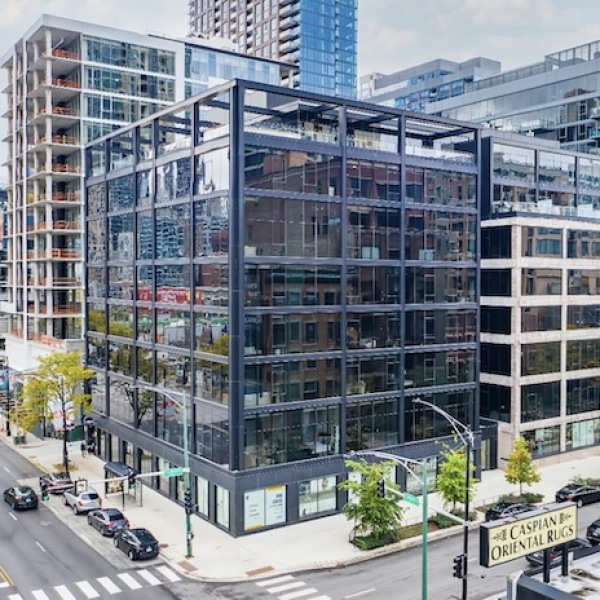
Here in River North, we've built The Ardus Apartments with this connected lifestyle in mind. Our modern spaces blend the character of our historic warehouse building with everything you need for contemporary city living. And yes, we've made sure you're just steps away from the 'L' train lines that put all of Chicago within easy reach—from your morning commute to your weekend explorations.
If you're ready to experience what it means to truly live in the heart of the city, with all its conveniences at your doorstep, we'd love to show you around. Explore River North apartment rentals at The Ardus and find how good connected living can feel. Your next chapter in Chicago starts with a single, smart choice about where you call home.