

What Are Industrial Apartments in Chicago?
Industrial apartments Chicago are residential spaces converted from former warehouses, factories, and manufacturing buildings — and right now, there are around 945 loft-style apartments available to rent across the city.
Here's a quick look at what defines them:
- Exposed brick walls and original masonry from historic construction
- High ceilings — typically 14 to 17 feet in authentic hard loft conversions
- Oversized factory windows that flood spaces with natural light
- Open floor plans with minimal interior walls, adapted from industrial layouts
- Raw architectural details like exposed ductwork and concrete floors
These aren't cookie-cutter apartments. They're spaces with a story.
Chicago's manufacturing past left behind hundreds of massive, well-built structures across neighborhoods like the West Loop, Fulton Market, River North, and South Loop. Starting decades ago, developers began converting these buildings into residential spaces — keeping the bones intact while adding modern comforts.
Today, living in one means you get both history and convenience. Think soaring ceilings and original brick alongside in-unit laundry, fitness centers, and rooftop decks.
Whether you're drawn to the raw character of a true warehouse conversion or the polished take on industrial style in a newer build, Chicago has a wide range of options worth exploring.

Defining the Industrial Aesthetic
When we talk about the industrial aesthetic in Chicago, we are really talking about a marriage between the city's blue-collar history and modern urban design. The appeal lies in the "unfished" look—the idea that a home can feel both rugged and incredibly sophisticated at the same time.
In Chicago, these spaces aren't just one-size-fits-all. Depending on the original purpose of the building—whether it was a garment factory, a cold-storage warehouse, or a printing press—the resulting apartment will have a distinct personality. Historical preservation is the name of the game here. Developers work to keep the original soul of the building alive, which often means leaving the imperfections that give the space its character, like scars on the concrete floors or the weathered patina of century-old brick.
To help you navigate your search for Chicago loft rentals, it is important to understand the three main categories you'll encounter.
| Feature | Hard Lofts | Soft Lofts | Timber Lofts |
|---|---|---|---|
| Origin | Authentic warehouse conversions | New construction mimicking style | Converted warehouses/factories |
| Ceiling Height | 14–17 feet | 10–14 feet | 12–16 feet |
| Primary Materials | Concrete, brick, steel | Drywall, glass, modern finishes | Wood beams, brick, hardwood |
| Sound Privacy | Lower (concrete/open tops) | Higher (fully enclosed walls) | Moderate (thick wood floors) |
| Vibe | Raw, edgy, historical | Polished, modern, sleek | Warm, organic, rustic |
Defining Industrial Apartments Chicago: Hard Lofts vs. Soft Lofts
The biggest distinction you’ll make during your hunt for Industrial apartments Chicago is between "hard" and "soft" lofts.
Hard Lofts are the authentic originals. These are true adaptive reuse projects where a building that once housed heavy machinery now houses humans. You will find real exposed ductwork, massive concrete pillars, and often, the original freight elevator doors. These spaces are prized for their 14–17 foot ceilings and a sense of volume that you just can't find in standard construction.
Soft Lofts, on the other hand, are typically newer buildings designed to look like lofts. They offer the aesthetic—high ceilings, large windows, and maybe some accent brick—but they come with the perks of modern construction. This usually means better soundproofing, more closets, and walls that actually go all the way to the ceiling (a luxury if you have a roommate!). While they lack the "gritty" history of a hard loft, they provide a polished version of the industrial look that many renters prefer.
Top Neighborhoods for Industrial Apartments Chicago
Chicago’s industrial history is mapped out across its neighborhoods. If you are looking for that classic warehouse feel, you’ll want to focus your search on a few key areas where manufacturing once thrived.
West Loop & Fulton Market
Once the city's meatpacking and wholesale district, the West Loop is now the "loft capital" of Chicago. You'll find massive warehouse conversions here that have been turned into some of the most sought-after residences in the city. Fulton Market, specifically, is home to former food processing plants that now sit alongside tech headquarters and world-class dining.
River North
River North has one of the highest concentrations of historic industrial buildings in the city. Originally a district of warehouses and shipping facilities near the Chicago River, it evolved into a gallery district before becoming a residential powerhouse. Living here puts you in the middle of the action. For a deeper dive into the specific buildings in this area, check out our River North Lofts guide.
South Loop & Printer's Row
As the name suggests, Printer's Row was once the heart of the Midwest's publishing industry. These buildings were built to hold massive, heavy printing presses, meaning they have incredibly sturdy bones, high ceilings, and beautiful brickwork. The South Loop offers a slightly more residential feel while still maintaining that heavy industrial character.
Logan Square
For those looking for a bit more of a creative, neighborhood vibe, Logan Square features several notable factory-to-apartment conversions. These buildings often offer a unique community feel and are popular with artists and those looking for flexible live/work spaces.
Architectural Elements of Warehouse Conversions
What makes an industrial apartment feel "industrial"? It’s all in the details that were originally designed for utility but are now celebrated for their beauty.
Essential Features of Industrial Apartments Chicago
- 14–17 Foot Ceilings: The sheer vertical space is the first thing you’ll notice. In the early 1900s, these heights were necessary for machinery and ventilation; today, they make a 700-square-foot studio feel like a palace.
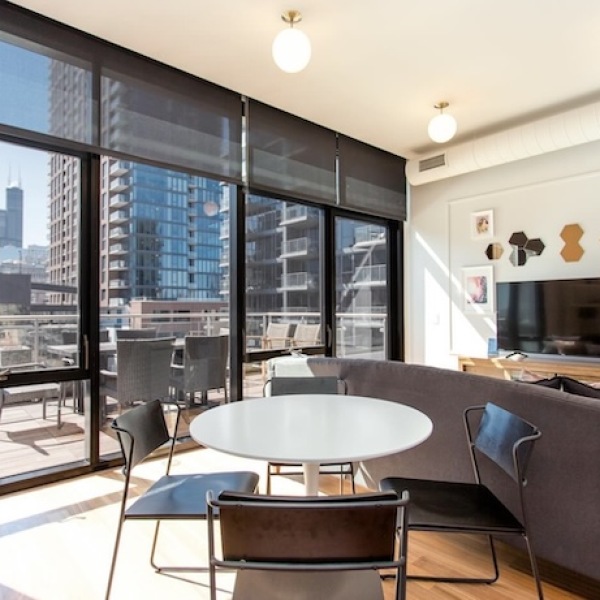
- Massive Factory Windows: These aren't your standard apartment windows. We’re talking about floor-to-ceiling glass, often with steel frames. They were designed to provide light to workers before electricity was widespread, and today they offer some of the best city views available.
- Original Masonry: Exposed brick is the hallmark of the style. Whether it’s the deep red of a West Loop warehouse or the "Chicago Common" brick found in Logan Square, these walls provide texture and warmth that paint simply can't match.
- Timber Beams: In timber lofts, the structural support comes from massive, old-growth wood posts and beams. These elements add an organic, rustic touch to the otherwise "cold" industrial materials like steel and concrete.
- Flexible Layouts: Because these buildings were designed as open floor plates for manufacturing, the apartments often have very few interior walls. This allows you to define your own spaces—using rugs, bookshelves, or furniture to separate your "bedroom" from your "office."
Modern Amenities and Lifestyle Benefits
Living in a building from 1910 doesn't mean you have to live like it's 1910. The best Industrial apartments Chicago offer a "best of both worlds" scenario.
Contemporary Comforts
Modern conversions, like those found at The Ardus, integrate high-end amenities directly into the historic fabric. You can expect:
- Rooftop Decks: Many of these buildings have flat roofs that were once used for water tanks or storage. Now, they are transformed into lounges with grilling stations, fire pits, and 360-degree views of the Chicago skyline.
- Smart Tech: From keyless entry to Nest thermostats, modern lofts are often more "connected" than traditional apartments.
- Fitness Centers: You'll often find gyms with a view, featuring everything from Peloton bikes to full weight circuits.
- In-Unit Laundry: While older conversions might have shared laundry rooms, modern standards almost always include a washer and dryer in every unit.
Pet-Friendly Living
If you have a furry friend, industrial apartments are often a great fit. The open layouts provide plenty of room for pets to roam, and the durable materials—like polished concrete or hardwood—are much easier to clean than carpet. Most buildings in Chicago are pet-friendly, though it is standard to have a two-pet limit per apartment. Many even offer specific pet amenities like on-site dog runs or washing stations.
Ready to see one of these spaces for yourself? You can SCHEDULE A SHOWING to explore available warehouse-style units.
Renter Checklist: What to Consider Before Signing
While the aesthetic is unbeatable, living in a converted warehouse comes with a few unique considerations. Before you sign that lease, keep these practical points in mind:
- Sound Insulation: In authentic hard lofts, walls sometimes don't go all the way to the ceiling, or the concrete floors can carry noise from the neighbor above. When touring, ask about the soundproofing between units.
- Heating and Cooling Efficiency: Those 17-foot ceilings and giant windows are gorgeous, but they take more energy to heat in a Chicago winter. Ask about average utility costs and check the windows for drafts.
- Storage Solutions: Industrial buildings weren't built with walk-in closets. You might need to get creative with wardrobes, under-bed storage, or external storage units offered by the building.
- Parking Availability: Since many of these buildings are in older, densely packed neighborhoods, on-site parking can be a premium. Check if the building has a garage or if you’ll be hunting for street spots.
- Building History: It’s always fun to know what your apartment used to be! Was it a shoe factory? A bakery? Knowing the history adds to the pride of living there.
Essential Tour Questions:
- Do the walls go all the way to the ceiling?
- What is the guest entry system (especially in older buildings)?
- Are utilities included, or are they sub-metered?
- Is there bike storage available (a must for Chicago loft dwellers)?
Frequently Asked Questions about Industrial Apartments in Chicago
What is the difference between a hard loft and a soft loft?
A hard loft is an authentic conversion of an old industrial building, featuring original materials like concrete, brick, and timber. A soft loft is a newer construction designed to look like a loft, often featuring more modern finishes and fully enclosed bedrooms.
Are industrial apartments in Chicago pet-friendly?
Yes, the vast majority are very welcoming to pets. The durable floors and open spaces are ideal for animals. However, most buildings do enforce a two-pet limit and may have specific breed restrictions or monthly pet rent.
How do I distinguish an authentic warehouse conversion from new construction?
Look at the ceilings and the pillars. If you see massive concrete columns with "mushroom" tops or heavy timber beams that look like they've been there for a century, it’s an authentic conversion. If the brick looks perfectly uniform and the "exposed" pipes look a little too strategically placed, it might be a new construction mimicking the style.
Conclusion
Finding the perfect Industrial apartments Chicago is about finding a space that resonates with your personal style. Whether you want the raw, unfiltered history of a hard loft in the West Loop or a sophisticated, amenity-rich conversion in River North, the options are as diverse as the city itself.
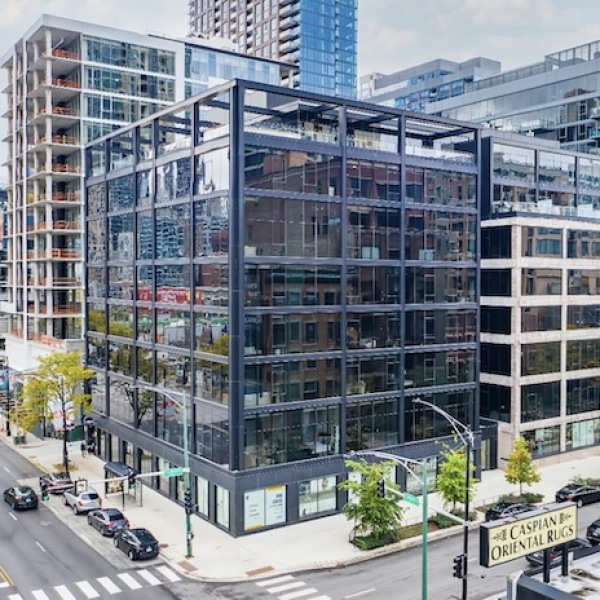
At The Ardus Apartments, we’ve taken a piece of Chicago’s history—a former warehouse in the heart of River North—and transformed it into a living experience that honors its past while embracing the future. With our rooftop lounge, on-site coffee shop, and a blend of historical charm and contemporary features, we offer a unique way to experience the city.
Live the lifestyle you want in warehouse style apartments Chicago and discover why these historic spaces remain the most coveted addresses in the city.