

Why Green Space Matters in Your Urban Home
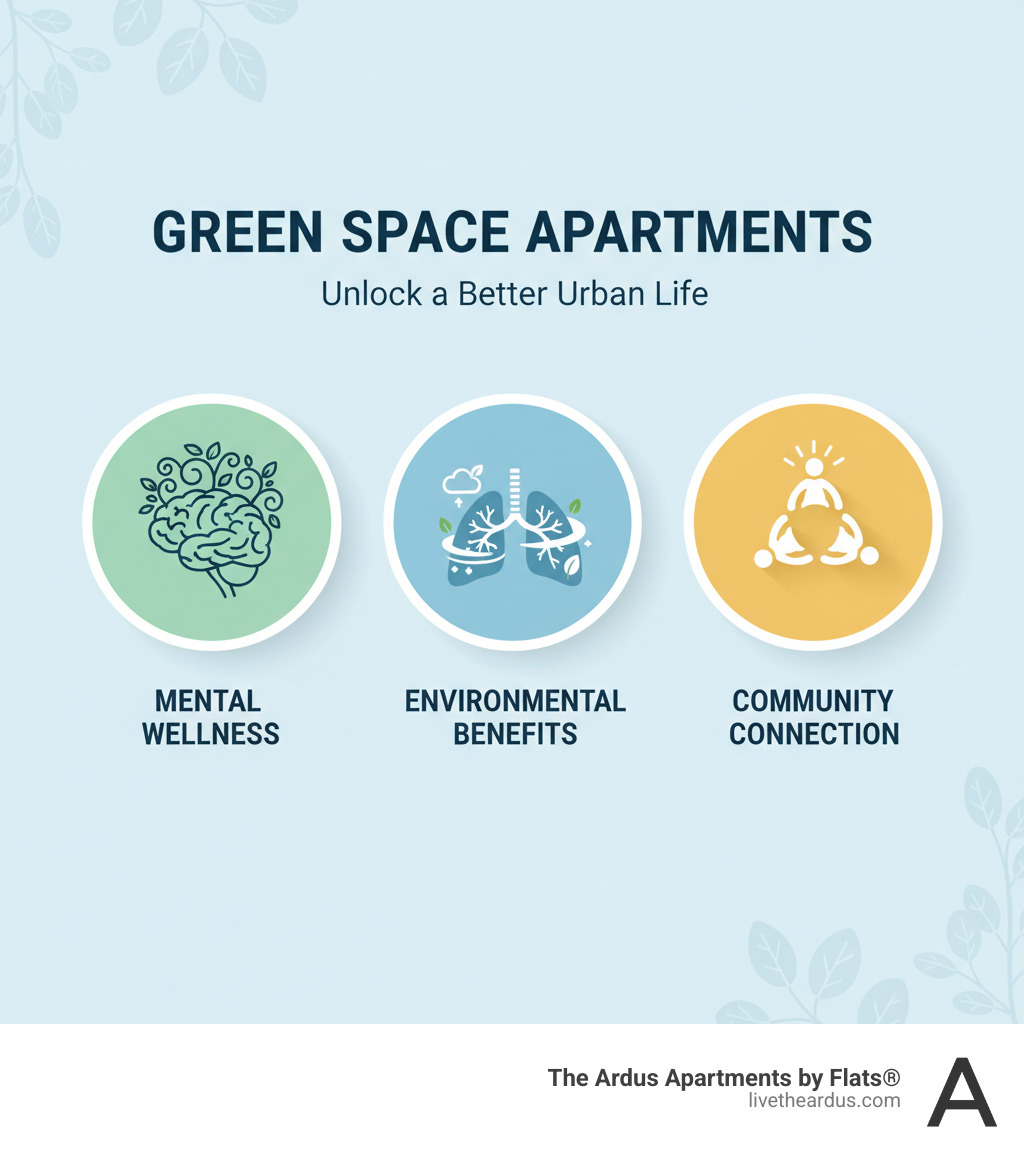
Green space apartments are residential communities that thoughtfully integrate natural elements—from rooftop terraces and landscaped courtyards to community gardens and private balconies—into urban living environments. These spaces offer more than aesthetics; they deliver measurable benefits for your health, community, and the environment.
Key benefits of green space apartments include:
- Mental wellness: Exposure to nature reduces stress, improves focus, and improves overall well-being
- Environmental impact: Plants filter air, reduce greenhouse gases, and mitigate urban heat island effects
- Community connection: Shared green spaces help residents build relationships and foster a sense of belonging
- Physical health: Access to outdoor areas encourages activity, provides fresh air, and promotes better sleep
- Property value: Well-designed green amenities attract residents who stay longer and value their living environment
When most people think about city living, they imagine improved access to culture, entertainment, work, and transportation. What rarely makes that mental checklist is greenspace. Many assume they'll have to give up gardens and yards for an urban lifestyle.
That assumption is wrong.
Urban apartments are increasingly designed to bridge this gap. Thriving gardens and abundant greenery aren't just pleasant to look at—they increase biodiversity, reduce greenhouse gases, and help combat climate change. For residents, these spaces provide beauty, calm, and a vital connection to nature that office work and dense housing often strip away.
For building owners, the equation is equally compelling. Properties with well-designed green spaces are places people want to live. Residents hold onto their leases longer and often don't mind paying a premium for them.
The reality is simple: green space, done well, transforms apartment living from a compromise into something genuinely enriching.
The Resident Experience: How Green Spaces Improve Well-being
City living brings incredible energy and opportunity, but let's be honest—it can also leave you feeling a bit drained. Between work deadlines, crowded trains, and the constant hum of activity, finding moments to truly unwind isn't always easy.
This is where green space apartments become more than just a nice-to-have feature. They become essential.

Picture this: You step outside your apartment door and into a landscaped courtyard. There's a bench under a tree, the sound of water from a nearby fountain, and suddenly your shoulders drop. That knot in your chest loosens. You can actually breathe.
That's not poetic exaggeration—it's biology. Being around plants and natural elements genuinely reduces stress and improves your mental state. These outdoor spaces give you permission to slow down, whether you're reading a book, sipping your morning coffee, or just watching the clouds drift by.
The benefits reach beyond mood, too. Fresh air and sunlight do wonders for your physical health, encouraging you to move your body and helping regulate your sleep cycles. Even a quick walk through a courtyard or some time on a balcony with plants can shift your entire day.
The Impact on Mental and Physical Health
Research keeps proving what most of us already sense: being surrounded by greenery lowers stress levels and improves overall well-being. The colors, textures, and even the smell of plants and soil work as natural stress relievers in ways that scrolling through nature photos on your phone simply can't replicate.
When you have consistent access to green spaces, you'll likely notice improved mood and better sleep cycles. Natural light helps your body maintain its rhythms, while the calming effect of nature makes it easier to wind down at the end of the day.
These spaces also encourage you to get outside and move. Maybe it's a morning stretch on the lawn, a walk along a garden path, or playing fetch with your dog. Speaking of which, apartments with dog parks provide an essential outlet for both pets and their people—exercise, fresh air, and a chance to decompress together.
The vitamin D exposure from spending time outdoors supports everything from bone health to immune function. And frankly, after hours spent under fluorescent lights or staring at screens, your body craves it.
Think of these green spaces as your serene retreat from city life—a place where you can reset without having to leave your building. They're not just pretty; they're functional tools for maintaining your health in an urban environment.
Fostering Community and Connection
Here's something you might not expect: green spaces are incredible community builders.
Shared courtyards, gardens, and outdoor seating areas naturally bring people together. You're watering plants in a community garden plot, and the person next to you mentions they're growing the same tomatoes. Suddenly you're swapping gardening tips and making plans to share the harvest.
Or you're grilling in the BBQ area, and neighbors you've only nodded to in the elevator actually become friends. These shared spaces create opportunities for real interaction in ways that passing in hallways never will.
Community gardens deserve special mention here. They give residents a common purpose and a reason to check in with each other regularly. There's something about getting your hands in the dirt together that breaks down social barriers fast.
Even areas designed for pets become gathering spots. The Dog Parks in River North Chicago and similar spaces in other neighborhoods turn into social hubs where residents bond over their four-legged companions, creating connections that extend well beyond dog talk.
These aren't forced interactions or awkward mixer events. They're organic moments of connection that happen naturally when people share beautiful, functional outdoor spaces. Over time, these small encounters build into something bigger: a genuine sense of belonging that transforms an apartment building into an actual community.
And that makes all the difference between simply living somewhere and truly feeling at home.
The Bigger Picture: Environmental and Community Impact
The beauty of green spaces in apartment living goes well beyond what we experience on a personal level. These natural areas are doing important work for our planet, quietly addressing some of the biggest environmental challenges our cities face today.

Think about how much hotter cities feel compared to the countryside. That's what we call the urban heat island effect, and it's a real problem. All that concrete and asphalt absorbs and traps heat, making our neighborhoods significantly warmer than surrounding areas. Green space apartments help combat this by acting as natural cooling systems. Trees provide shade, plants release moisture into the air, and vegetation absorbs heat rather than reflecting it back at us.
These green areas also work hard to clean the air we breathe. Every plant acts as a tiny air filter, pulling pollutants and toxins from the atmosphere and releasing fresh oxygen. In a city like Chicago, where air quality can be a concern, this natural filtration makes a real difference.
There's something else happening in these green spaces that's easy to overlook: they're creating homes for wildlife. Birds nest in the trees, butterflies visit the flowers, and even the occasional rabbit might make an appearance. This increased biodiversity reminds us that nature and urban living don't have to be at odds. For more insights on bringing nature into city living, a guide to integrating nature in urban spaces offers valuable perspectives on how even small urban dwellings can accept greenery.
Greener Cities, Healthier Planet
The environmental impact of green spaces in apartment communities extends to some of our most pressing global concerns. Plants are nature's answer to greenhouse gas reduction. They absorb carbon dioxide from the atmosphere and convert it into oxygen through photosynthesis. When you consider how many plants a well-designed green space can support, that's a substantial contribution to cleaner air.
Water management is another area where these spaces shine. When it rains, traditional concrete surfaces send water rushing into storm drains, often overwhelming city systems and carrying pollutants into our waterways. Green spaces do something different. The soil and vegetation absorb rainwater naturally, reducing runoff and helping to filter out contaminants before they reach our water supply. This natural stormwater management also helps replenish groundwater, which is essential for long-term water security.
The energy conservation benefits are equally impressive. Green roofs and walls provide natural insulation, keeping buildings cooler in summer and warmer in winter. This means less reliance on air conditioning and heating systems, which translates directly to reduced energy consumption and lower greenhouse gas emissions.
When apartment communities choose native plant species, they're making an even smarter environmental choice. These plants have adapted to our local climate, which means they need less water, less maintenance, and no harsh chemicals to thrive. They support local ecosystems and provide food and habitat for native wildlife.
This commitment to environmental sustainability often extends beyond the green spaces themselves. Many communities, including those offering apartments with bike storage, are creating infrastructure that supports a greener lifestyle in every aspect, from how we care for our outdoor spaces to how we get around the city.
The Economic Value of Greenery
Here's something that benefits everyone: well-designed green spaces make good financial sense for property owners and residents alike. These natural amenities have become a significant factor in property desirability. When people are apartment hunting, a beautiful rooftop garden or a lush courtyard can be the detail that tips the scales.
This increased appeal translates directly into higher resident retention rates. When people love where they live, they stay longer. Lower turnover means fewer vacancies, reduced marketing costs, and more settled communities. It's a win for everyone involved.
Green spaces have become a unique selling proposition in the competitive apartment market. They signal that a building is thoughtfully designed and that the community cares about quality of life. This reputation attracts residents who value their living environment and are looking for something more than just four walls and a roof.
The long-term value for property owners is substantial. Buildings with well-maintained green spaces command attention in the market and build strong reputations within their neighborhoods. These natural amenities are investments that continue to pay dividends year after year, improving the community's standing and ensuring its appeal for years to come.
Designing Nature into the City: Innovative Green Space Apartments
Creating green space apartments in dense urban environments isn't just about planting a few trees and calling it a day. It requires genuine creativity, careful planning, and a willingness to see potential where others see only concrete and steel. The best urban developments transform overlooked spaces into thriving natural environments that residents actually want to use.

Modern architects and developers are getting smarter about how they integrate nature into buildings. They're looking up, not just out—using rooftops, walls, and even interior spaces in ways that would have seemed impossible a generation ago. The result is apartment communities where greenery feels like it belongs, not like it was awkwardly squeezed in as an afterthought.
Sought-After Green Amenities in Modern Apartments
Walk through any well-designed urban apartment community today, and you'll notice that green spaces come in many forms. Some are grand and impressive, while others are small but thoughtfully placed. What matters most is that they're functional, accessible, and genuinely improve daily life.
Rooftop terraces have become the crown jewels of many buildings, offering sweeping city views alongside comfortable seating, grilling areas, and lush plantings. They're perfect for morning coffee or evening gatherings with neighbors. Community gardens give residents a chance to get their hands dirty, growing everything from tomatoes to herbs while building friendships over shared harvests.
At ground level, landscaped courtyards provide quiet retreats from street noise, often featuring winding pathways, comfortable benches, and sometimes ponds or fountains that add soothing water sounds. These spaces become natural gathering spots where you might bump into a neighbor on your way to work or settle in with a book on a sunny afternoon.
Even smaller touches matter. Private balconies let residents create their own mini gardens with container plants and herbs. Walking paths lined with greenery offer pleasant routes for a quick stroll or morning jog. And for those with furry companions, dedicated outdoor areas have become essential—many pet-friendly apartments Chicago residents won't even consider a building without them.
These amenities work together to create a living environment that feels complete, where nature isn't separate from your home but woven into it.
The Role of Biophilic Design in Green Space Apartments
There's a design philosophy gaining momentum called biophilic design, and once you understand it, you start seeing it everywhere. At its heart, it's about acknowledging something we all instinctively know: humans need connection with nature to feel our best.
In green space apartments, this means going beyond just adding plants. It's about using natural materials like wood and stone that feel good to touch and look at. It's about designing spaces with large windows that flood rooms with sunlight and offer views of trees or gardens, even if it's just a glimpse. You'll notice plant-inspired patterns in fabrics and finishes, colors that echo the outdoors, and textures that remind you of natural landscapes.
The smartest applications of biophilic design are almost invisible. Plants are placed not just for looks but to purify the air and absorb sound. Natural light is maximized to help regulate our sleep cycles. Views are carefully framed to give us visual connections to nature, even from inside. The goal isn't to make you feel like you're camping—it's to create spaces where you simply feel better, more relaxed, and more yourself.
Creative Solutions for Dense Urban Areas
Here's where things get really interesting. In cities where every square foot is precious, developers have learned to think differently about where green spaces can go.
Vertical gardens and green walls turn building facades into living artwork. These aren't just decorative—they insulate buildings, filter air, and create habitats for birds and beneficial insects. Rooftop farms and gardens are changing previously wasted space into productive areas where residents can harvest fresh vegetables or simply enjoy being outdoors with a view.
Some developments work carefully to preserve and integrate mature trees that were already on site, building around them rather than bulldozing everything and starting from scratch. These established trees provide instant shade, beauty, and a sense of history that new plantings can't replicate.
For individual residents, container gardening has become a game-changer. With the right planters and a bit of know-how, even the smallest balcony can support a surprising variety of plants. Developers are also getting creative with windowsills, ledges, and interior walls, using hanging planters, modular shelving systems, and smart indoor gardening solutions to bring greenery into spaces that traditional landscaping could never reach.
The message is clear: even in the densest neighborhoods, there's almost always room for nature if you're willing to look at spaces with fresh eyes. And when you do, the results can be genuinely transformative.
Cultivating Your Community: Maintenance and Resident Involvement
The most beautiful green space apartments don't just happen by accident—they thrive through a combination of thoughtful professional care and genuine resident involvement. When we all pitch in, even in small ways, these shared outdoor areas become more than just nice-to-have amenities. They transform into spaces we truly care about, places that feel like extensions of our own homes.
This sense of shared responsibility makes all the difference. It's what keeps a rooftop garden thriving year after year, what makes a courtyard feel welcoming rather than neglected, and what builds those unexpected friendships over a shared tomato harvest. When residents feel connected to these green spaces, they naturally want to see them flourish, creating a positive cycle that benefits everyone in the community.
Effective Maintenance for Lasting Appeal
Let's be honest—keeping green spaces looking their best takes real work and skill. While we can all help out in meaningful ways, professional landscaping teams are the unsung heroes who handle the technical side of things. They're the ones who know when to prune, how to spot early signs of disease, and which treatments will keep plants healthy without harming the environment.
One of the smartest investments any community can make is in smart irrigation systems. These clever setups deliver just the right amount of water at the right times, preventing waste and keeping water bills reasonable while ensuring plants get exactly what they need. It's the kind of behind-the-scenes technology that makes a huge difference without anyone really noticing—until they see how lush everything looks.
Choosing the right plants from the start makes maintenance so much easier. Native, low-maintenance plants are naturally adapted to Chicago's climate, which means they handle our cold winters and humid summers without constant intervention. They need less water, fewer fertilizers, and they're naturally resistant to local pests. Think about plants like black-eyed Susans, purple coneflowers, or ornamental grasses that practically take care of themselves once established.
Regular upkeep matters too—those seasonal tasks like weeding, mulching, and refreshing plantings keep spaces looking vibrant through every season. And honestly, sometimes the simplest things make the biggest impact: keeping paths swept, benches clean, and seating areas inviting. These details show residents that their community cares about maintaining beautiful spaces for everyone to enjoy.
How Residents Can Contribute to Green Space Apartments
While professional teams handle the heavy lifting, there's something special about residents adding their own touch to communal green spaces. When you plant a few herbs on your balcony or help out at a community garden workday, you're not just growing plants—you're growing connections with your neighbors and deepening your sense of home.
Personalizing your balcony is one of the easiest ways to bring more green into your life. Container gardening opens up endless possibilities, even in small spaces. Hanging baskets overflowing with petunias, vertical planters filled with herbs, or a few pots of cherry tomatoes can transform any balcony into your own private garden retreat. The beauty is that you get to choose what makes you happy—whether that's fragrant jasmine, colorful succulents, or fresh basil for your weekend cooking.
Many communities offer community garden plots where residents can claim their own small piece of earth to cultivate. There's something deeply satisfying about growing your own food, even if it's just a handful of lettuce and some radishes. Plus, you'll inevitably end up chatting with fellow gardeners, swapping tips about dealing with aphids or sharing surplus zucchini.
Shared herb gardens are another wonderful feature in many green space apartments. Everyone can snip fresh rosemary for their roast chicken or grab some mint for summer drinks. It's a small thing, but these shared resources create a sense of abundance and community spirit.
Of course, all of this works best when everyone respects the community guidelines around plant choices, pest management, and keeping shared spaces tidy. These aren't meant to be restrictive—they're just practical ways to ensure our green spaces stay beautiful and enjoyable for everyone.
Some communities organize volunteer planting days or seasonal garden clean-ups, and these events are genuinely fun. You'll learn new gardening tricks, meet neighbors you might not have crossed paths with otherwise, and feel that satisfying tiredness that comes from working outdoors. Plus, there's usually coffee and donuts involved, which never hurts.
When we all contribute—whether through tending our own balconies, volunteering for community projects, or simply respecting and enjoying these shared spaces—we're investing in more than just greenery. We're building the kind of community where people actually know their neighbors, where outdoor spaces feel cared for and welcoming, and where nature remains part of our daily urban lives.
Conclusion
Throughout this exploration, we've seen how green space apartments offer something genuinely transformative for urban living. These aren't just decorative touches or nice-to-have extras—they're fundamental to creating homes where we can truly thrive.
The benefits ripple outward in every direction. On a personal level, these natural havens reduce our stress, sharpen our focus, and encourage us to move our bodies and breathe fresh air. They help us sleep better and feel more grounded, even amid the bustle of city life. Socially, they bring us together, creating those spontaneous conversations over shared garden beds or evening gatherings on rooftop terraces that transform neighbors into friends and buildings into genuine communities.
For our planet, the impact is equally profound. These green spaces are working hard behind the scenes—cooling our cities, filtering our air, managing stormwater, and providing vital habitats for birds, butterflies, and other urban wildlife. They're practical solutions to real environmental challenges, all while making our communities more beautiful and valuable.
The creativity we're seeing in green space design is truly exciting. From vertical gardens scaling building facades to rooftop farms producing fresh herbs, from biophilic interiors that bring nature inside to intimate courtyards that offer quiet refuge—these innovations prove that nature and urban density can coexist beautifully.
Green spaces aren't a luxury we add when everything else is done. They're essential to what makes a city apartment feel like home. They represent a commitment to living well, to caring for our environment, and to building communities where people genuinely connect.
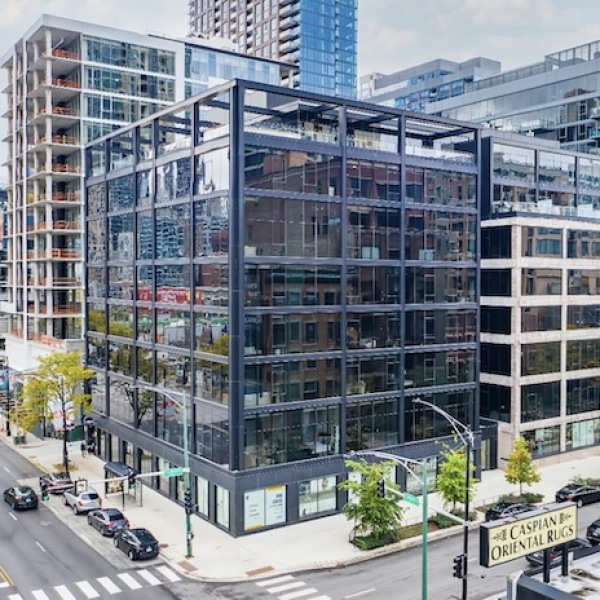
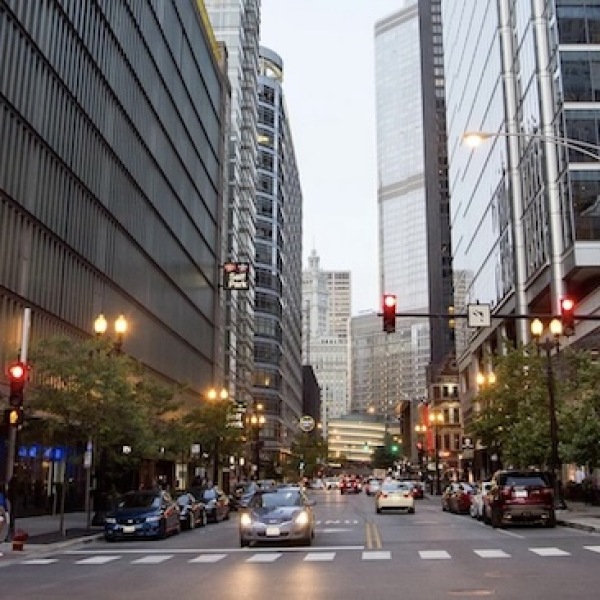
The Ardus Apartments embodies this philosophy, seamlessly weaving sophisticated design and natural elements throughout its vibrant neighborhood. It's a place where the energy of River North meets the tranquility of thoughtfully designed green spaces, showing that urban living doesn't require compromise.
We'd love for you to experience what this kind of living feels like. Explore our full range of amenities and find how green space apartments can transform your daily life into something richer, more connected, and genuinely fulfilling.