

Why Finding Pet-Friendly Rentals Matters for Modern Living
Apartments near me that allow pets are more than just housing - they're communities that understand your furry friend is family. With 68% of American households owning pets, finding the right rental that welcomes both you and your companion can feel overwhelming.
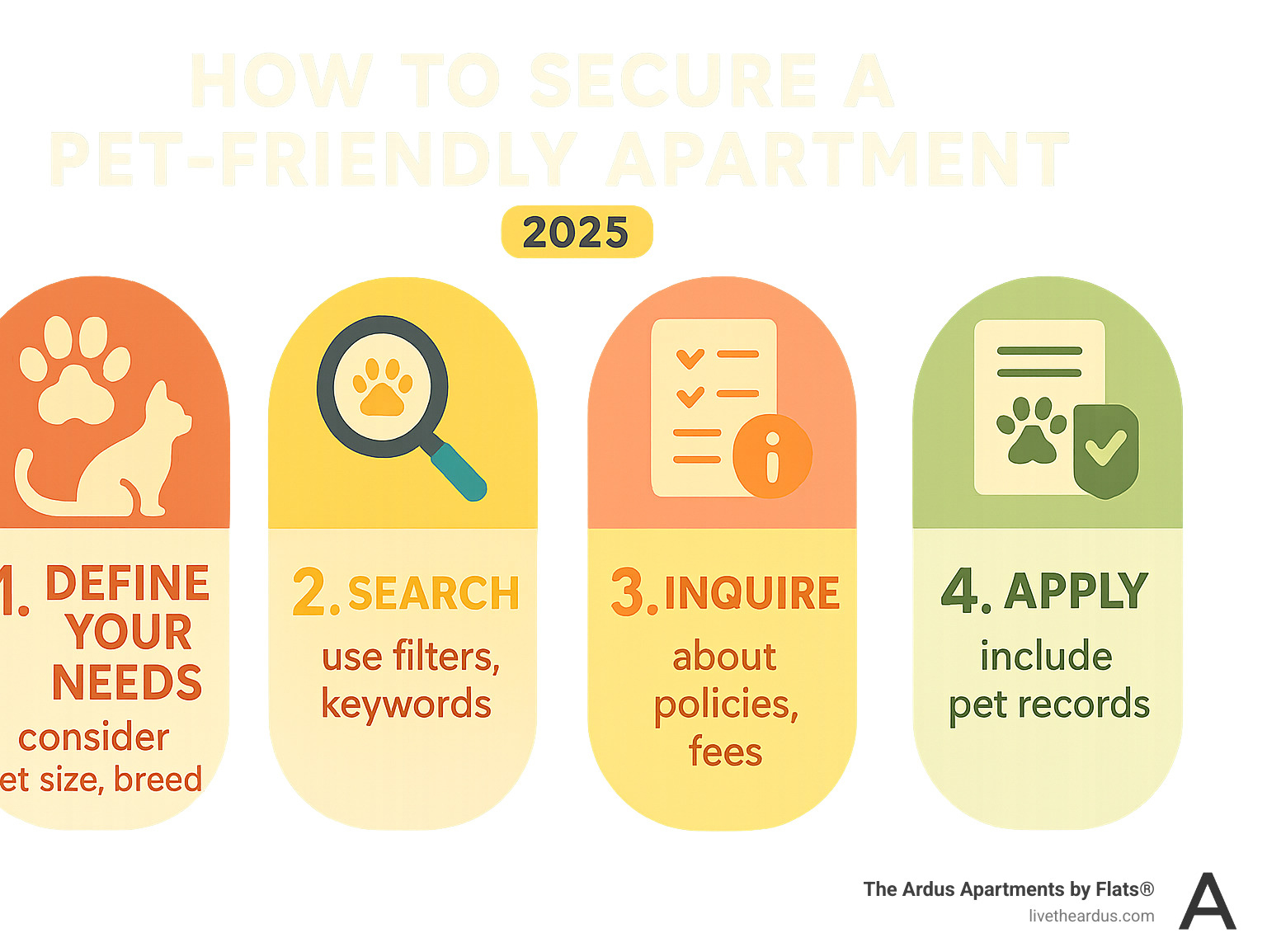
Quick Guide to Finding Pet-Friendly Apartments:
- Search with filters - Use "pet-friendly" filters on rental websites
- Ask about policies - Inquire about breed restrictions, weight limits, and fees upfront
- Prepare documentation - Gather vet records, photos, and pet references
- Check amenities - Look for dog parks, pet washing stations, and nearby green spaces
- Budget for extras - Factor in pet deposits and monthly pet rent
The good news? Pet-friendly communities are becoming the norm, not the exception. Many properties accept most breeds up to certain weight limits, like 85 pounds, with a two-pet limit, while others offer no weight restrictions at all.
But pet-friendly means different things to different places. Some communities go beyond basic acceptance to offer dedicated dog runs, pet washing stations, and even curated lists of local veterinarians and pet stores.
Your search doesn't have to be stressful. With the right approach and knowledge of what to look for, you'll find a home where both you and your pet can thrive.
What to Look For in a Pet-Friendly Community
When we start on the exciting journey of finding a new home for ourselves and our beloved pets, it's crucial to look beyond just the "pets allowed" sticker. A truly "pet-friendly" apartment community goes the extra mile to ensure comfort and convenience for both human and animal residents. It's about creating an environment where pets are not just tolerated, but genuinely welcomed.
We consider a community truly pet-friendly when it offers more than just permission for our furry, scaled, or feathered friends to live there. We look for tangible features and amenities that make daily life easier and more enjoyable for everyone.
On-site amenities are a big indicator. Imagine stepping out of your apartment and having immediate access to a dedicated space where your dog can run and play safely. Many modern communities understand this need and provide apartments with dedicated dog parks. These fenced-in areas are a fantastic way for pets to socialize and burn off energy without having to leave the property.
Beyond play areas, practical facilities also make a huge difference. Pet washing stations, often called "pet spas" or "grooming stations," are a godsend after a muddy walk or for routine bathing. These dedicated areas typically feature liftd tubs, spray nozzles, and sometimes even professional dryers, saving our own bathrooms from messy clean-ups.
Another often-overlooked amenity is the presence of pet waste stations throughout the property. These stations, equipped with bags and disposal bins, encourage responsible pet ownership and help keep common areas clean and pleasant for all residents.
Furthermore, we always seek out communities with ample green spaces and well-maintained walking trails. These natural areas provide opportunities for leisurely strolls, training sessions, and simply enjoying the outdoors with our companions. It's not just about having a place to live; it's about having a place to live with our pets.
Inside the apartment itself, certain features can also contribute to a pet-friendly living experience. Durable flooring, such as hardwood or laminate, can withstand the wear and tear of paws and makes cleaning up accidents much easier than carpet. Convenient layouts that offer easy access to outdoor areas, or even private patios or balconies, can be beneficial for pets who enjoy fresh air.
Key Features of a Pet-Welcoming Apartment
Beyond the community amenities, the individual apartment unit and its immediate surroundings play a significant role in creating a pet-welcoming environment.
One of the first things we consider is proximity to parks and other outdoor recreational areas. While on-site dog parks are fantastic, having public parks or nature trails nearby offers additional exploration opportunities. For us, this means finding a home where a quick walk to a dog-friendly park is a reality, not a distant dream.
Access to pet services is equally important. We think about how easy it will be to get to a veterinarian for routine check-ups or emergencies, or a pet store for food and supplies. Walkable neighborhoods with pet-friendly businesses are a huge plus, making errands with our pets a breeze.
For some pets, particularly dogs, ground-floor options can be highly desirable. Easy access to the outdoors for potty breaks, especially for puppies or older dogs, can simplify daily routines. Similarly, private patios or balconies offer a safe, confined outdoor space where pets can relax and observe the world, provided they are secured and supervised. We find these small luxuries can make a big difference in a pet's quality of life.
Understanding Common Pet Policies
Navigating pet policies can feel like deciphering a secret code, but understanding the common restrictions and fees is key to a smooth rental experience. We've learned that policies vary widely, so it's always best to ask detailed questions early in our search.
Many communities impose a two-pet limit per apartment home. This is a common standard, and it helps communities manage the overall pet population. We've seen this policy consistently, whether it's for apartments, townhomes, or even condos.
Weight restrictions are another frequent policy. While some progressive communities boast "no weight limit," others may have a cap, such as 85 lbs. It's important to clarify this, especially if you have a larger breed.
Perhaps the most talked-about restriction is breed limitations. Many communities have a list of breeds often deemed "aggressive" that are not permitted. We commonly encounter restrictions on breeds such as Pit Bulls, German Shepherds, Akitas, Staffordshire Terriers, Chows, Alaskan Malamutes, Doberman Pinschers, and Rottweilers, or any mix including these breeds. It's crucial to inquire about specific breed restrictions directly with the leasing office.
| Policy Type | Description | Common Application |
|---|---|---|
| Pet Limit | The maximum number of pets allowed per apartment unit. | Often 2 pets per unit. |
| Weight Limit | A restriction on the maximum weight of a pet. | Varies; some communities have no limit, others cap at 25 lbs, 50 lbs, or 85 lbs. |
| Breed Restrictions | A list of specific dog breeds that are not permitted due to perceived temperament or insurance reasons. | Commonly includes Pit Bulls, German Shepherds, Rottweilers, etc. |
| Exotic Pet Rules | Regulations regarding non-traditional pets. | Hamsters, birds, reptiles, and fish may be allowed, often with tank size limits (e.g., not exceeding 100 gallons). |
Beyond dogs and cats, some policies extend to exotic pets. We've found that hamsters, birds, reptiles, and fish are often allowed, though there might be tank size restrictions, typically not exceeding 100 gallons. If you have a less common pet, it's always best to explicitly ask about their policy.
Finally, while not a restriction, it's worth noting that some properties may require a "meet & greet" with property management for pet approval. This is an opportunity for them to ensure your pet is well-behaved and a good fit for the community.
How to Find the Best Apartments Near Me That Allow Pets
The search for the perfect pet-friendly apartment doesn't have to be a scavenger hunt. With the right strategies and a bit of preparation, we can streamline the process and increase our chances of finding a great home for our entire family.

Our primary tool in this modern era is online search. Rental websites are invaluable resources, and most now include robust filters specifically for pet policies. We always start by selecting "pet-friendly" or "pets allowed" in the search filters. This immediately narrows down the vast number of listings to only those relevant to our needs.
Beyond basic filters, we use specific keywords in our searches. Terms like "dog park," "pet spa," "pet-friendly amenities," or even "no breed restrictions" can help uncover communities that truly accept pets.
When browsing listings, we pay close attention to the "Pet Policy" section, which is usually detailed on the property's dedicated page. This is where we look for information on pet limits, weight restrictions, and any mentioned breed restrictions. If the information isn't immediately clear, we consider it an immediate red flag and make a note to inquire further.
Asking the right questions is paramount. When we contact a leasing office, we don't just ask, "Do you allow pets?" Instead, we dig deeper:
- "What is your maximum pet limit?"
- "Are there any weight restrictions for dogs?"
- "Do you have a list of restricted breeds? Can you provide it to me?"
- "What are the one-time pet fees and monthly pet rent charges?"
- "Do you have any pet amenities on-site, like a dog park or washing station?"
- "Are there any specific rules for pets in common areas?"
- "What is your policy on exotic pets, if applicable?"
Being proactive and detailed in our inquiries saves us time and avoids disappointment later in the process.
Tips for Your Search for Apartments Near Me That Allow Pets
Beyond the initial search, there are several steps we can take to make our application stand out and ensure a smooth transition for our pets.
We highly recommend preparing a "pet resume." Think of it as a professional summary for your furry friend. This document can include:
- Your pet's name, age, and breed.
- A cute, clear photo of your pet.
- Information about their training (e.g., house-trained, obedience classes attended).
- Details about their temperament (e.g., quiet, friendly with other animals/people).
- Current vet records, including vaccination history and spay/neuter status.
- Contact information for previous landlords or trainers who can provide a letter of recommendation for your pet's good behavior.
Having this documentation ready shows landlords that we are responsible pet owners who take our commitments seriously. It can also help alleviate any concerns they might have.
We also make it a point to inquire about pet policies early in the process, ideally before even touring a unit. This ensures we don't fall in love with a place only to find out our beloved companion isn't welcome.
Once we're serious about a particular apartment, we read the lease carefully, paying special attention to all clauses related to pets. This includes understanding any specific rules about noise, waste disposal, leash requirements in common areas, and liability. It's better to clarify any ambiguities upfront.
Finally, we explore all available pet-friendly apartment options. Sometimes, a property might not explicitly advertise extensive pet amenities but still have a welcoming policy. Conversely, some might highlight pet-friendliness but have strict breed or weight limits. Our goal is to find the best fit, balancing our needs with those of our pets.
Exploring Pet-Friendly Neighborhoods
Our apartment search isn't just about finding a building; it's about finding a neighborhood that accepts our pet-inclusive lifestyle. We believe a truly pet-friendly home extends beyond the four walls of our unit.
We always start by researching local areas. What's the vibe of the neighborhood? Does it feel welcoming to pets? We look for signs of other pet owners – people walking dogs, pet waste stations on public sidewalks, or local businesses with "pets welcome" signs.
Identifying parks and trails is a top priority. Green spaces for walks, runs, and playtime are essential for a pet's well-being. In a city like Chicago, for example, we'd look for neighborhoods with easy access to lakefront paths, larger parks, or even dedicated dog parks operated by the city. We also consider the safety and cleanliness of these outdoor areas.
Checking walkability scores is another useful tip. A high walkability score often means more pedestrian-friendly streets, which are ideal for daily walks. It also suggests a denser concentration of amenities, some of which might be pet-friendly.
Finally, we try to gauge the overall community atmosphere. Are there pet-friendly cafes or restaurants with outdoor seating? Are there local pet events or meet-up groups? A neighborhood that actively supports and celebrates its pet population often makes for a happier, more integrated living experience for both us and our animal companions.
Essential Local Resources for Pet Owners
Moving to a new area with a pet means establishing a new support network. Beyond finding the right apartment, we understand the importance of locating essential local services that will keep our pets healthy, happy, and well-cared for.

First and foremost, finding a reliable veterinarian is crucial. Before we even move, we research local vets, looking at reviews, services offered, and emergency care availability. Having a trusted vet nearby gives us peace of mind, knowing that our pet's health needs can be promptly addressed.
Next on our list is locating pet supply stores. Whether it's for specialized food, toys, or routine supplies, knowing where to stock up quickly is a huge convenience. Many larger pet stores also offer grooming services, training classes, or even adoption events, making them valuable community hubs for pet owners.
Grooming services are also essential for many pets, especially those with longer coats or specific needs. We look for local groomers with good reputations and convenient hours. Similarly, for those times when we're at work or away, identifying reliable dog walkers and sitters is a must. Many neighborhoods have professional services or trusted individuals who can provide daily walks or overnight care, ensuring our pets receive the attention they need even when we can't be there.
We've found that some pet-friendly apartment communities go above and beyond by providing residents with curated lists of these local pet-related businesses. This thoughtful gesture saves us time and effort in our search and instantly connects us with valuable resources in our new neighborhood. It truly shows how committed a community is to supporting its pet-owning residents.
Frequently Asked Questions about Pet-Friendly Apartments
Searching for apartments near me that allow pets often brings up the same questions time and again. We've gathered the most common concerns and questions to help make your rental journey smoother and less stressful.
What is the difference between a one-time pet fee and monthly pet rent?
Understanding the financial side of pet ownership in rentals can feel confusing at first, but it's actually pretty straightforward once you know what each charge covers.
A pet fee is exactly what it sounds like - a one-time, non-refundable payment you make when you first move in with your furry friend. Think of it as an upfront investment that covers the administrative costs of processing your pet's application and helps the property prepare for any potential wear and tear your pet might cause to common areas.
Pet rent, on the other hand, is an ongoing monthly charge that gets added to your regular rent payment. This recurring fee helps cover the continuous maintenance and cleaning of pet amenities like dog parks, pet washing stations, and common areas where pets spend time. It also helps offset any additional insurance costs the property might face by welcoming pets into the community.
The key difference? Pet fees are a one-time expense you budget for move-in, while pet rent becomes part of your monthly housing costs for as long as you and your pet call the apartment home.
Do pet policies apply to assistance animals?
This is an important distinction that many people aren't fully aware of. Pet policies do not apply to certified assistance animals - and this includes everything from breed restrictions and weight limits to pet fees and monthly pet rent.
Under fair housing laws, assistance animals (which include both service animals and emotional support animals) aren't considered pets at all. They're working animals that provide essential support or perform specific tasks for individuals with disabilities. Because of this legal classification, properties must make reasonable accommodations for them.
What does this mean practically? If you have a qualified assistance animal, you're typically exempt from the usual pet-related charges and restrictions that apply to traditional pets. The property can't charge you extra fees or turn you away because of your assistance animal's breed or size.
What are the general rules for pets in common areas?
While every community has its own specific guidelines, there are some universal expectations that make apartment living pleasant for everyone - both pet owners and those without pets.
The most consistent rule across communities is the leash requirement. Pets need to be on a leash and under their owner's direct control whenever they're in common areas like hallways, lobbies, courtyards, or even designated dog parks. This simple rule keeps everyone safe and comfortable.
Immediate cleanup is another non-negotiable expectation. Pet owners are responsible for cleaning up after their animals right away, using the pet waste stations or appropriate disposal bins provided throughout the property.
Beyond these basics, communities often have additional guidelines about pet noise levels, specific areas where pets aren't allowed (like fitness centers or pool areas), and sometimes designated hours for using dog parks or other pet amenities.
The best approach? Always check with your specific community's pet guidelines and any local dog park rules. These details are usually covered during the leasing process, but don't hesitate to ask questions if anything seems unclear. A little preparation goes a long way toward creating a harmonious living environment for everyone in the community.
Conclusion
Finding the perfect apartments near me that allow pets is a special journey. It's not just about a new address. It's about finding a warm, welcoming home for your whole family – furry friends included! We've walked through what makes a community truly pet-friendly. Remember those amazing on-site amenities like dog parks and pet washing stations? And how important it is for your actual apartment to have durable flooring and easy outdoor access?
We also steerd the often-tricky world of pet policies. Now you understand the difference between a pet limit and weight restrictions, and how breed restrictions work. Plus, you know that assistance animals have special considerations, and what to ask about exotic pet rules.
Think back to our tips for finding your dream home. We talked about smart online search strategies and the power of a great pet resume. Those little steps can make a big difference! We also highlighted why exploring pet-friendly neighborhoods and connecting with local resources like veterinarians and pet supply stores is so important.
The happiness that comes from finding a place where your pets aren't just allowed, but truly celebrated, is wonderful. It lets you fully accept the joy and companionship your pets bring every single day. Communities like The Ardus Apartments truly understand this. They show how modern living can blend historical charm with fantastic pet-friendly features, creating a unique and welcoming home for everyone.
So, take these insights and feel confident as you begin your search. Your perfect pet-friendly home is out there, waiting for you!